
We define an omnichannel crm as a unified system that brings every customer interaction into one clear timeline.
When a customer like Sarah reaches out via Instagram DMs, email, or a phone call, our multi-channel system shows agents the full history in seconds.
That single view removes repetition for customers and lets agents act with the right context. This improves customer experience and boosts satisfaction across channels.
In this guide, we show how businesses integrate email, VoIP, web forms, and live chat so no conversation gets lost.
We focus on tools and data flow that help support teams handle complex requests while keeping the brand voice consistent on social media and other platforms.
Key Takeaways
- One timeline for all customer interactions reduces repeats and speeds resolution.
- Integrating email, VoIP, and live chat preserves context for agents.
- Centralized data improves customer engagement and overall satisfaction.
- Consistent platforms help maintain a unified brand voice across channels.
- Proper setup turns scattered conversations into a single, actionable customer journey.
Understanding the Omnichannel CRM Landscape
Customer touchpoints now span stores, inboxes, and social feeds, and businesses must tie these threads into a single view.
From 2020 to 2024, leading retail chains increased real-time in-store stock visibility from 48.1% to 65.5%. That jump shows how fast systems must evolve to meet customer expectations.
We see many businesses manage communication across marketing, sales, and support systems. This split often creates fragmented data and duplicate conversations that slow agents and hurt the customer experience.
- Linking online and offline interactions gives teams a single view of purchase history and open conversations.
- Shared information improves service, sales handoffs, and marketing relevance.
- Modern systems must route email, chat, voice, and in-store signals into one timeline.
| Metric | 2020 | 2024 |
|---|---|---|
| Real-time stock visibility | 48.1% | 65.5% |
| Fragmented channels (est.) | High | Reduced with integration |
| Impact on service speed | Slower | Faster |
We conclude that an omnichannel crm is essential for businesses that want coherent interactions, reliable data, and consistent engagement across platforms and time.
Distinguishing Between CRM Models
A common mistake is treating each channel as its own inbox instead of parts of one customer story. We separate three models so businesses can choose the right path for their service and sales teams.
Single-Channel Limitations
Single-channel systems focus on one platform, such as email, and miss the broader customer relationship history.
That narrow view forces customers to repeat information. It slows resolution and undermines personalization.
The Multichannel Silo Problem
Multichannel setups accept inputs from many platforms but often keep them in separate silos.
When interactions across channels remain disconnected, agents lack context and handoffs break down.
- Single-channel: simple, but limited view and poor context retention.
- Multichannel: flexible, but creates data silos and fragmented conversations.
- Unified approach: links history and communication so agents see the full journey.
Research shows 80 percent of customers expect personalized, customer-centric service. Moving away from siloed systems helps us log every interaction and give agents the context they need, when they need it.
How Omnichannel CRM Systems Function
We gather touchpoints from every platform into one concise timeline so teams can act with clarity and speed.
Data Unification and Syncing
We pull customer data from email, social media, chat, voice, and web forms into a single profile. This central profile shows purchase history, support notes, and past conversations. Agents see a clear view without toggling between platforms.
Our syncing runs in real time so interactions are current. Automatic routing sends tickets to the right team and prioritizes messages by urgency or account status.
“The Kustomer Timeline provides a holistic view of the customer, making workflows efficient.”
By keeping a continuous record of customer interactions across channels, we prevent lost context when customers switch platforms. Workflow automation helps us manage high volumes while preserving the quality of each engagement.
- Real-time sync: no outdated information for agents.
- Centralized view: faster, more accurate responses.
- Automated routing: better prioritization and fewer handoffs.
Essential Features for Modern Customer Engagement
A modern system must give teams fast access to context so every interaction moves the conversation forward.
Holistic Customer Profiles
We aggregate purchase history, support tickets, and communication preferences into one 360-degree view. That single profile reduces lookup time and helps agents answer questions with full context.
Only 13 percent of businesses currently carry customer context across channels in real time. In contrast, 87 percent of interactions lose history when a customer switches devices or platforms.
Cross-Channel Continuity
Cross-channel continuity lets a customer start a live chat and finish via email without repeating their issue. This continuity improves the customer experience and lowers friction for agents.
Real-Time Data Synchronization
Real-time sync keeps sales, marketing, and support working from the same, up-to-date customer data. Timely data prevents duplicate work and speeds resolution.
- Fewer repeats: agents see full conversation history and resolve issues faster.
- Better engagement: personalized responses raise customer satisfaction.
- Unified view: the omnichannel crm approach ties communications and history into one timeline.
By combining these features, businesses move beyond reactive support toward proactive service. We empower agents with the tools and context they need to deliver consistent customer engagement across channels.
Strategic Benefits of Unified Customer Data
A single, searchable customer timeline turns fragmented interactions into measurable outcomes.
We find that organizations prioritizing customer experience see three times the revenue growth of peers, according to research from IBM and Adobe. That growth links directly to how well teams use unified customer data to personalize outreach and service.
McKinsey reports 67 percent of customers feel frustrated when interactions are not tailored. This shows that data-driven personalization is no longer optional.
- Operational efficiency: unified data reduces admin work and speeds resolution.
- Better sales and marketing: journey visibility helps us spot high-intent prospects and act fast.
- Faster support: agents access order history and fulfillment status immediately, cutting investigation time.
- Leadership insight: integrated datasets guide inventory and marketing spend decisions.
By tying customer interactions across channels into one view, businesses improve customer satisfaction, boost engagement, and make smarter decisions across teams and time.
Mapping Your Customer Journey for Integration
We map every step a customer takes, from first click to post-purchase messages, to spot where conversations stall.
Identifying Friction Points
We create detailed personas and plot every touchpoint on a simple journey map. This shows where customers pause, drop off, or repeat information.
Next, we audit where customer data lives and how agents access context across email, chat, phone, and web forms. That audit uncovers duplicated records, missing history, and slow handoffs.
Our process highlights fixes that matter:
- Consolidate data stores so agents see full customer interactions in one view.
- Automate routing and enrichment to reduce manual lookups.
- Test journeys regularly and gather customer feedback to refine flows over time.
| Issue | Impact | Suggested Fix |
|---|---|---|
| Missing conversation history | Repeat questions; longer resolution | Centralize profiles and sync history |
| Slow ticket routing | Delayed service; poor experience | Implement automated routing rules |
| Disparate tools | Agent context gaps | Audit tools and integrate key platforms |
Technical Implementation of Your Omnichannel Strategy
A solid technical plan makes sure every incoming message, call, or web form lands in the right place with the right context.
Channel Authentication
We start by verifying each platform’s identity and permissions. That means connecting Instagram Business accounts, enabling API access for VoIP, and validating email domains so messages route securely.
Two-way sync is enabled so agents reply from the same interface. That reduces tab switching and keeps history intact.
Defining Rules of Engagement
We set availability hours, tone of voice, and SLAs per channel. These rules tell the system when to escalate, when to defer, and how to tag priority inquiries.
We also test edge cases: images, voice notes, and attachments must attach to the right profile and follow the same workflow as text.
| Step | Purpose | Key Action |
|---|---|---|
| Authenticate Platforms | Secure routing | API keys, domain validation, OAuth |
| Enable Two-way Sync | Faster replies | In-interface sending, status updates |
| Identity Merge | Preserve history | Match emails, phone, social IDs |
| Automation Rules | Correct routing | Topic/urgency/segment based rules |
We ensure customer data and identities merge intelligently so support and sales teams keep context when users move from chat to email. Robust automation then routes requests to specialists, improving response time and overall experience.
Leveraging Automation and Artificial Intelligence
We use AI and automation to scale support without sacrificing quality.
According to the IBM Institute for Business Value, 67 percent of business leaders have begun integrating AI into their service streams. We lean on this shift to handle routine requests across chat, email, and social media.
AI-powered chatbots give instant answers and triage simple issues. That reduces wait times and frees our agents to tackle complex problems.
Predictive analytics surface patterns in customer behavior. We can spot friction in the customer journey and act before issues escalate.
Sentiment analysis helps us read tone across channels and adjust responses in real time. Workflow automation then tags and routes social media complaints or support tickets to the right team.
By combining these tools, our system turns vast customer data and interactions into clear actions. That improves service, speeds resolution, and strengthens customer engagement for sales and support teams alike.
Best Practices for Long Term Success
Good governance turns messy contact lists into reliable profiles that power smarter service.
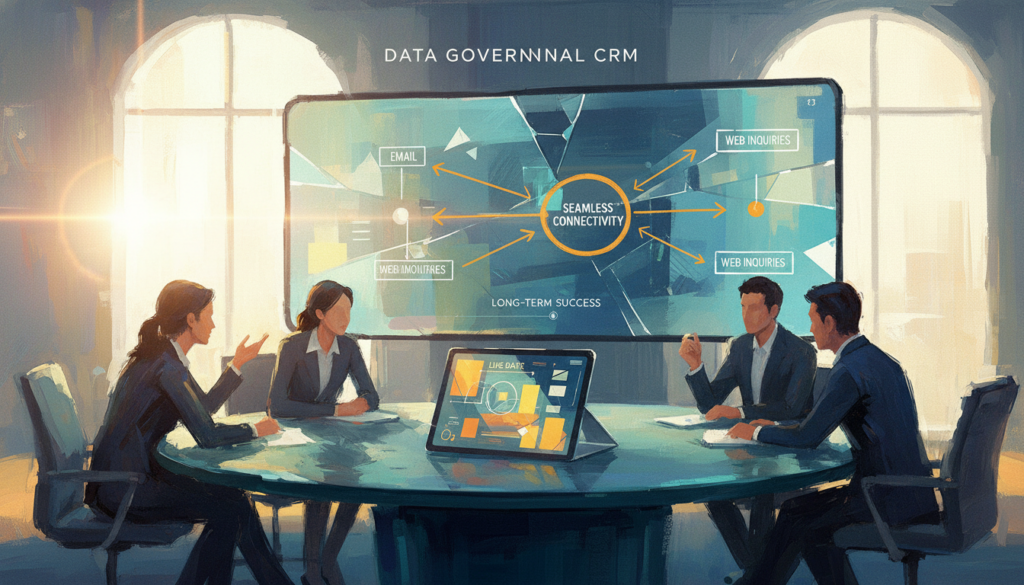
Data governance and hygiene provide the foundation for lasting value from any omnichannel crm investment.
Data Governance and Hygiene
We enforce regular deduplication and scheduled updates so customer data stays accurate for AI and reporting.
Rollouts should be phased. Start with one team or product line, measure performance, then expand.
- Track quantitative metrics: resolution time, first contact resolution, and ticket volume.
- Gather qualitative feedback: agent notes and supervisor reviews to refine workflows.
- Train by role: supervisors and QA analysts need tools to monitor engagement and service quality.
| Best Practice | Why it Matters | Quick Action |
|---|---|---|
| Deduplication | Prevents inaccurate profiles | Weekly automated merges |
| Phased rollout | Limits risk; enables tuning | Pilot → measure → scale |
| Metrics + feedback | Shows where agents need support | Combine dashboards with monthly surveys |
We focus post-purchase support to turn buyers into advocates. Consistent follow-up across channels builds loyalty and long-term growth.
Conclusion
Bringing voice, email, and web messages into one view reduces friction and speeds decisions.
We covered how a unified timeline reshapes the customer journey and raises the quality of customer experience. Integrating channels and applying AI lets us scale service while keeping interactions personal.
Maintaining accurate data and refining engagement rules improves customer engagement and satisfaction. Map your current communication flows, find friction points, and fix the highest-impact gaps first.
When businesses take these steps, agents work faster, marketing and service align, and customer loyalty grows. Start small, measure results, and expand—this approach keeps you competitive as expectations evolve.