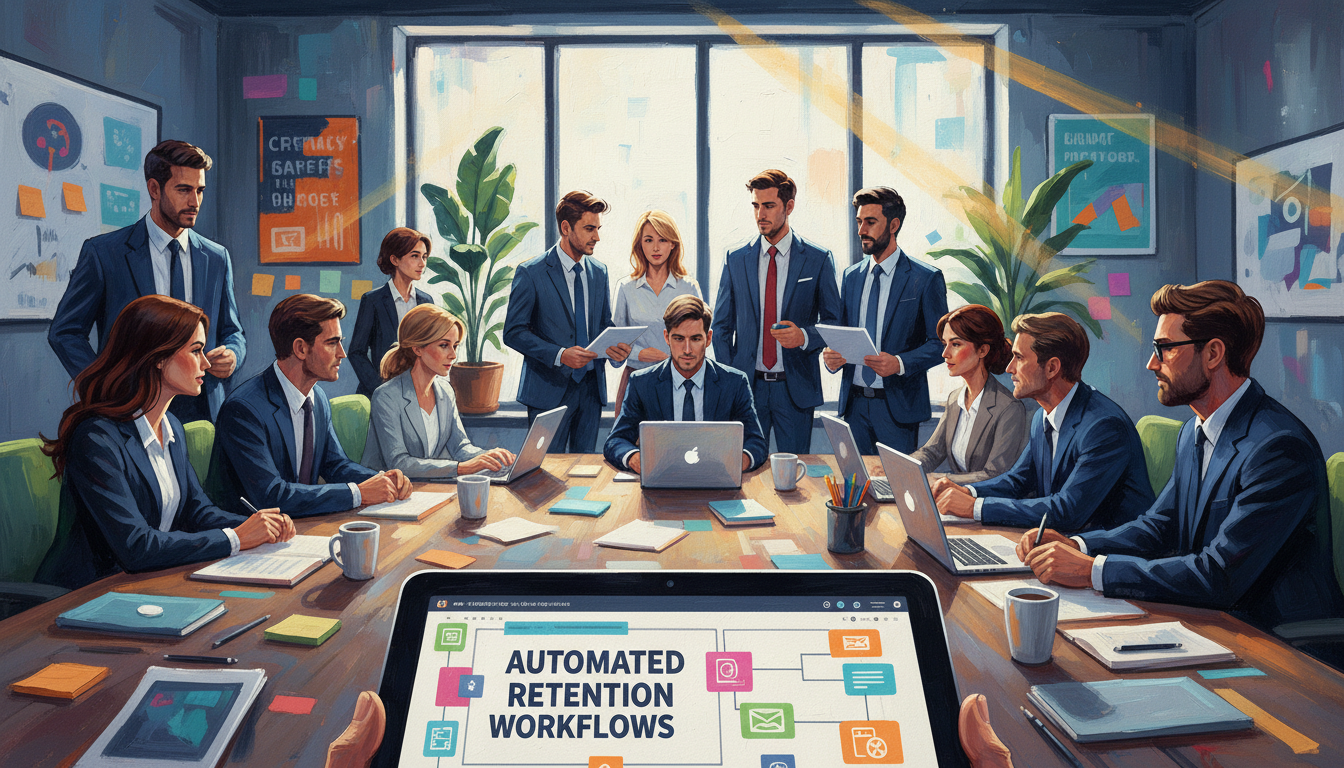
We build systems that stop churn by turning data into timely, human-centered actions. Our focus is simple: map customer behavior, spot risks early, and trigger precise campaigns that add clear value.
We use four automation plays that link product usage, onboarding feedback, and renewal signals. These plays let our teams scale personalized engagement without losing a human touch.
By blending analytics with real conversations, we improve customer lifetime value and the overall customer experience. Our tools track interactions and campaign performance so no critical time window slips by.
This approach relies on a solid CRM system that connects systems, sales, and marketing. When data flows well, our workflow automations deliver measurable success and long-term customer loyalty.
Key Takeaways
- Automated plays convert product signals into timely actions that reduce churn.
- Linked data across systems powers better customer behavior insights.
- We balance personalization with scale using targeted automation.
- Onboarding and feedback loops boost customer lifetime value.
- Teams gain clear renewal and campaign signals to protect revenue.
Understanding the Role of Retention in B2B SaaS
In B2B SaaS, the smartest investments focus on keeping customers and deepening value.
We see customer retention as the engine behind steady revenue and healthy growth. June gives us real-time customer insights that turn raw data into clear signals. Those signals help us spot risks and act before churn appears.
By centralizing customer data we build a unified view that lets sales and success teams tailor outreach for each renewal. We make engagement timely and relevant so the product keeps delivering measurable value.
- Use analytics to flag at-risk accounts early.
- Coordinate sales and success around renewal timing.
- Personalize interactions based on customer data and product use.
“Proactive strategies turn interaction signals into lasting relationships.”
Common Challenges in Customer Retention
Hidden gaps in engagement and scattered data put many accounts at risk long before signals become clear.
Visibility Gaps in Customer Engagement
We often lack a single view of customer activity. That makes it hard to spot declining product use or support needs.
Sales reps spend only 35% of their time selling because manual entry and broken processes steal focus.
- Missed interactions: no alert when customers stop using key features.
- Poor feedback loops: teams learn too late what customers value.
Team Misalignment and Siloed Data
Silos between sales, marketing, and success slow responses and dilute value for customers.
We fix this by centralizing data and automating routine tasks so teams can act fast on signals before churn grows.
“Streamlined systems turn scattered information into timely support.”
Goal: fewer manual steps, clearer handoffs, and consistent experience at renewal.
The Strategic Value of CRM Retention Workflows
When automation maps signals to action, teams regain time and customers feel supported.
We implement four plays to automate retention so every customer lifecycle stage has clear, repeatable steps.
By automating key interactions, our teams keep engagement steady without adding manual work. This lets us focus on high-value conversations.
We track renewal dates and account time to spot risks early. That tracking turns scattered data into timely outreach that prevents churn.
Our strategy is simple: deliver value at every touchpoint so customers see consistent experience and relevance.
- Prioritized accounts: we use time-on-account metrics to guide effort.
- Integrated sales automation: ensures timely, relevant messages across the journey.
- Scalable plays: maintain high standards as we grow.
“Strategic, automated plays let us protect renewal while deepening customer value.”
Connecting CRM Signals to Automated Outreach
Connecting event triggers to outreach is the fastest way to turn behavior into helpful support. We translate event-level signals into targeted actions that keep customers engaged and reduce churn risk.
Triggering Webhooks from CRM Events
We use the HeyReach API key to push events from our system into outbound sequences. Webhooks fire on specific customer behavior, starting onboarding steps or alerting support.
Mapping Data for Seamless Integration
Accurate data mapping is critical. Using tools like Make or Zapier, we normalize fields so sales and marketing teams see the same customer data and campaign triggers.
Routing Missing Profiles for Manual Review
If profiles are incomplete, we route them to a small review queue. That prevents failed automations and keeps campaigns tightly targeted.
Our approach blends automation with human checks so we scale retention strategies without losing the personal touch.
Leveraging LinkedIn for Human-Centric Retention
LinkedIn gives us a trusted space to have real, timely conversations with customers.
We leverage LinkedIn as a primary channel so our teams can engage where customers already network and share insights.
By syncing LinkedIn campaign efforts with our CRM data, outreach stays relevant to each customer journey stage. This alignment helps personalize messages and avoid generic touches.
Personalized communication on LinkedIn builds deeper relationships. Our sales reps share value-added content and thoughtful follow-ups to remain top-of-mind through renewal windows.
- We tie social touch signals to account data to prioritize outreach.
- We monitor every campaign to measure impact on customer retention goals.
- We focus on human-first strategies that competitors find hard to copy.
Our goal is simple: reach customers where they are, provide value, and protect long-term loyalty through consistent, human engagement.
Personalizing the Customer Experience Across the Lifecycle
We design lifecycle paths that help new customers reach value faster and keep long-term accounts engaged.
Onboarding Sequences for New Accounts
We build tailored onboarding sequences that guide customers through early use of the product. Each step maps to clear actions and short tasks so customers see wins in days, not weeks.
Renewal Campaigns for Long-Term Loyalty
Renewal dates act as ideal triggers. We launch automated campaigns ahead of those dates so our customers feel informed and supported.
Our teams analyze behavior and feedback to refine these sequences. Marketing and sales coordinate to keep messages consistent and timely.
Why this matters: automating repetitive actions frees the team to handle high-touch interactions that need human judgment. We continuously monitor performance and adjust campaigns so every interaction improves customer experience and supports long-term customer retention.
“Personalization across onboarding and renewal makes value obvious and keeps customers engaged.”
Proving Retention Impact with Data Attribution
We tie every customer action back to measurable outcomes so teams can see how engagement drives value.
Metrics for Measuring Success
Start with clear KPIs: renewal rates, customer lifetime value, and churn signals give a direct view of program impact.
We layer event-level analytics on top of account metrics to attribute which interactions and campaigns move the needle.
Tools like advanced analytics and behavioral reporting let us slice results by product use, time, and campaign source.
- Track conversions tied to specific actions and campaigns.
- Compare cohorts to spot which sequences reduce churn fastest.
- Use attribution windows to link interactions to renewal outcomes.
We review models regularly so our data stays accurate as product and customer behavior change. That makes our findings actionable for sales and marketing teams.
“Attribution proves the ROI of smart automation and secures resources to scale.”
Implementing Safety Layers and AI Assistance
Safety controls and AI guardrails keep automated messaging appropriate and timely for every customer.
We place rule-based checks before any automated action runs. This ensures messages pause if an account shows open support issues or recent sensitive interactions.
AI monitors account signals and flags at-risk customers for quick attention. When alerts appear, our team reviews context and decides the right human-led action.
We follow strict practices so renewal campaigns remain respectful and relevant. Automation never overrides a manual hold or an active sales conversation.
- Protective rules: pause sequences during support escalations.
- AI alerts: surface churn signals and behavioral anomalies.
- Regular audits: validate that data and actions match our customer retention goals.
By combining these layers, we scale automation safely while preserving the integrity of customer data and the trust of our customers.
Scaling Your Retention Operations Safely
Scaling retention starts with measured steps that prove value before broad deployment. We pilot new workflow changes on a small group of customer accounts. This gives us clear results and fast learning.
Phased Rollout Strategies
Controlled pilots and staged launches
We run short pilots, review engagement rates, and fix issues quickly. Then we expand in stages so systems handle higher volume without harming customer experience.
Balance matters: advanced automation and human checks work together. Our team monitors renewal and support signals to ensure each change adds real value.
- Test workflows on representative cohorts.
- Scale tools gradually while tracking analytics and rates.
- Keep onboarding and support processes consistent as volume grows.
| Phase | Scope | Key Metric |
|---|---|---|
| Pilot | 10–50 accounts | Engagement rate |
| Staged Rollout | 50–500 accounts | Renewal readiness |
| Full Launch | All eligible accounts | Churn and value lift |
“We expand only after data proves a workflow is safe and effective.”
Conclusion
A clear system that links account signals to timely outreach makes customer success repeatable and measurable.
We have shown how connecting CRM events to automated sequences builds a solid foundation for long-term retention. Each play we outline supports renewal readiness and helps spot risks earlier in the lifecycle.
Combined with attribution, dashboards, and AI alerts, these processes become easier to manage and more predictable as they scale. We recommend small A/B tests to tune message timing and templates before broad rollout.
Start small, measure results, and scale what works. When these core plays are in place, we strengthen customer relationships and steadily boost retention across our base.